
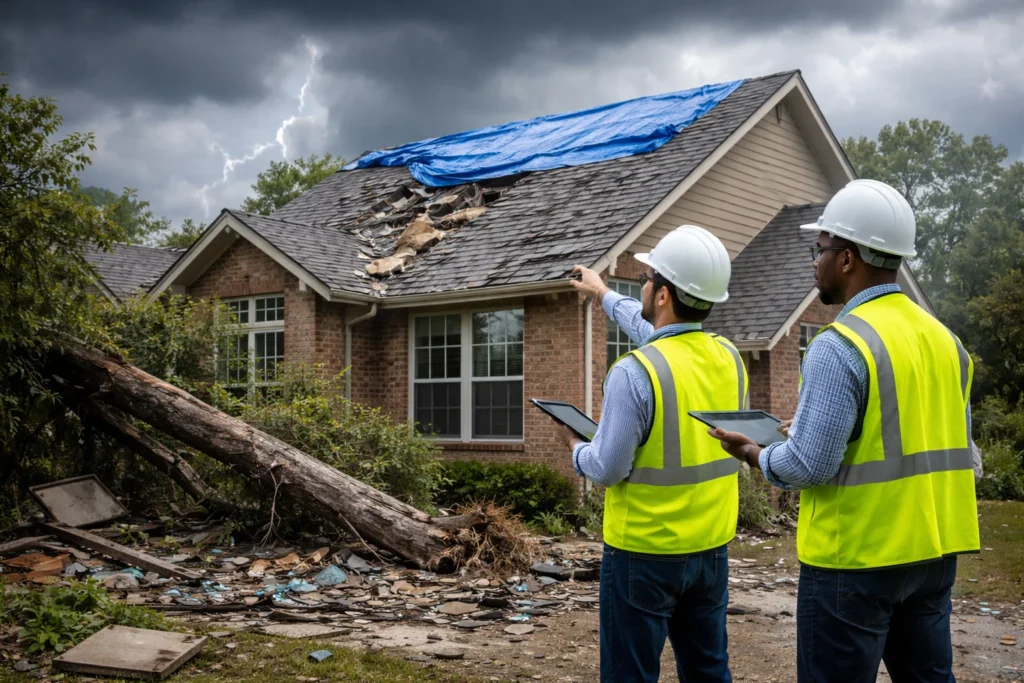
Storms in Carrollton don’t knock politely. They slam into roofs, tear through fences, flood living rooms, and leave homeowners staring at a mess that feels bigger than the sky itself. And in the middle of that chaos, one decision can make a dramatic financial difference: whether to hire a public adjuster for storm damage.
I’ve seen it firsthand. A family thinks the insurance process will be simple. It rarely is. Estimates come in low. Damage gets overlooked. Settlement offers don’t match reality. That’s when representation stops being optional and starts being strategic.
If your property has been hit by hail, wind, heavy rain, or tornado activity, this guide will show you exactly how a public adjuster for storm damage works, when you need one, and how to protect your claim in Carrollton, Texas.
Let’s get into it.
Storm Damage in Carrollton Is More Than Just a Roof Problem
North Texas weather has range. One afternoon it’s calm. That evening it’s golf-ball hail and 70-mph winds.
Carrollton homeowners routinely face:
- Severe thunderstorms
- Large hail events
- Straight-line wind damage
- Tornado threats
- Flash flooding
Each storm leaves a different signature on your property.
The Most Common Storm Claims in Carrollton
Storm damage rarely stays in one place. It spreads.
Typical claims include:
- Roof shingle bruising and granule loss
- Cracked or displaced flashing
- Water intrusion behind walls
- Ceiling stains and attic moisture
- Damaged siding and gutters
- Broken windows and screens
- Fence collapse
- Commercial flat roof membrane damage
And here’s the part most people miss: insurance companies don’t always see everything.
Hidden roof damage. Code upgrade requirements. Interior moisture that hasn’t surfaced yet. These are areas where claims are frequently underpaid.
That’s exactly where a public adjuster for storm damage changes the outcome.
What Is a Public Adjuster for Storm Damage?
Let’s clarify something right away.
A public adjuster works for you. Not the insurance company.
There are three types of adjusters in most storm claims:
| Type of Adjuster | Who They Work For | Who They Protect |
| Company Adjuster | Insurance Company | The Insurer |
| Independent Adjuster | Contracted by Insurer | The Insurer |
| Public Adjuster | Property Owner | You |
A public adjuster for storm damage is licensed by the State of Texas and represents homeowners and business owners in property insurance claims. Their job is to document, calculate, and negotiate your claim so you receive what your policy actually allows.
And yes, that matters.
Because policy language isn’t simple. Replacement cost versus actual cash value. Deductibles. Ordinance and Law coverage. Depreciation schedules. These details shape your settlement.
Most homeowners don’t analyze policies for a living. Public adjusters do.
Why Storm Claims Get Underpaid
You might think the insurance company’s estimate is accurate. Sometimes it is. Many times, it isn’t.
Here’s why:
1. Surface-Level Inspections
Insurance inspections are often brief. Adjusters may not:
- Lift shingles to inspect mat damage
- Check attic insulation saturation
- Test for hidden moisture
- Review local code upgrade requirements
Small oversight. Big financial impact.
2. Repair vs. Replacement Disputes
Insurers frequently argue for “repair” when full replacement is warranted. On roofs, especially.
In Texas, matching laws and code requirements can complicate partial repairs. If materials can’t match, full replacement may be required. That detail gets missed more than you’d think.
3. Hail Size Disagreements
Insurance carriers sometimes claim hail was “too small” to cause functional damage. Yet contractors and engineers may disagree.
A public adjuster for storm damage gathers documentation to support your position with measurable evidence.
The Storm Damage Claim Process (And Where Things Go Wrong)
Most homeowners assume the claim process is linear. It’s not. It’s layered.
Here’s a simplified version:
Step 1: Emergency Mitigation
Stop the damage. Tarp the roof. Extract water. Prevent mold growth.
Important tip:
Always document conditions before permanent repairs begin.
Step 2: File the Claim
You notify your insurer and receive a claim number. Simple enough.
Step 3: Insurance Inspection
An adjuster inspects the property and prepares an estimate.
This is the critical turning point.
Step 4: Settlement Offer
You receive a breakdown of what the insurer believes repairs should cost.
Step 5: Negotiation (If Necessary)
This is where a public adjuster for storm damage adds serious value.
With vs. Without a Public Adjuster
| Stage | Without Public Adjuster | With Public Adjuster |
| Inspection | Limited documentation | Detailed, independent inspection |
| Estimate | Based on insurer scope | Line-item reconstruction analysis |
| Code Review | Often overlooked | Full building code compliance review |
| Negotiation | Homeowner-led | Professional negotiation |
| Supplements | Reactive | Strategically prepared |
The difference often shows up in the final number.
How a Public Adjuster for Storm Damage Maximizes Your Claim
This isn’t about being aggressive. It’s about being thorough.
1. Comprehensive Property Inspection
Professional public adjusters use:
- Drone roof photography
- Moisture detection equipment
- Thermal imaging when necessary
- Detailed attic inspections
- Exterior elevation analysis
They don’t guess. They measure.
2. Xactimate-Level Estimating
Insurance companies use industry-standard estimating software. So do experienced public adjusters.
Every damaged component gets:
- Line-item pricing
- Labor calculation
- Material cost
- Overhead and profit consideration (when applicable)
That level of detail strengthens negotiation leverage.
3. Policy Analysis
This step is often overlooked by homeowners.
A public adjuster for storm damage examines:
- Replacement Cost Value (RCV) provisions
- Depreciation rules
- Ordinance & Law coverage
- Deductible structure
- Exclusions
I can’t stress this enough. The policy controls the payout. Understanding it changes strategy.
Residential vs. Commercial Storm Claims
Storm claims aren’t one-size-fits-all.
Residential Claims
Common focus areas:
- Asphalt shingle roofing
- Interior water staining
- Fence damage
- Gutters and downspouts
- HVAC unit exposure
Homeowners often underestimate attic moisture and insulation damage.
Commercial Claims
These are more complex.
They may involve:
- TPO or modified bitumen flat roofs
- Multi-tenant structures
- Business interruption coverage
- Inventory damage
- Tenant improvements
A public adjuster for storm damage who understands commercial coverage can uncover losses that dramatically impact the total claim value.
When Should You Call a Public Adjuster?
Timing matters.
Here are strategic moments to bring in representation:
- Immediately after storm damage
- After receiving a low estimate
- After a partial denial
- Before signing contractor contingency agreements
- When reopening a previously closed claim
In Texas, claims can sometimes be supplemented even after initial payment. But delays can complicate that process.
If you feel uncertain, that’s usually your signal.
Common Storm Damage Disputes in North Texas
Let’s talk reality.
“It’s Wear and Tear”
Insurance companies sometimes attribute damage to age rather than storm impact.
Distinguishing between hail impact and long-term deterioration requires expertise.
Partial Roof Repairs
Matching becomes an issue. If new shingles don’t match existing ones, aesthetic and functional concerns arise.
Code Upgrade Requirements
Local building codes may require full replacement under certain conditions.
If your policy includes Ordinance & Law coverage, those upgrades may be payable. If not identified properly, they’re often missed.
A skilled public adjuster for storm damage reviews these issues before negotiations even begin.
Mistakes Homeowners Make After a Storm
Let’s be direct.
These are avoidable.
- Accepting the first offer without review
- Waiting too long to file
- Failing to photograph damage
- Performing permanent repairs before documentation
- Assuming the insurer’s estimate is final
You don’t get a second chance at documentation.
Be methodical. Be proactive.
How to Choose the Right Public Adjuster in Carrollton
Not all representation is equal.
Here’s a checklist:
- Verify active Texas public adjuster license
- Ask about North Texas hail claim experience
- Request sample documentation format
- Understand fee percentage clearly
- Confirm contingency structure (no upfront fees)
- Ensure local familiarity with Carrollton building requirements
Experience in local storm patterns matters. North Texas claims have nuances that out-of-state adjusters may not fully grasp.
How Public Adjusters Get Paid
Transparency is important.
Most public adjusters in Texas operate on a contingency basis. That means:
- No upfront payment
- A percentage of the settlement
- Paid only when the claim pays
If they don’t increase or secure recovery, they don’t get compensated.
That alignment of incentives is powerful.
Can a Public Adjuster Reopen a Storm Claim?
In certain cases, yes.
If:
- Damage was overlooked
- Supplemental issues arise
- Additional interior damage appears
- Code requirements were missed
A public adjuster for storm damage may help reopen or supplement the claim.
However, deadlines apply. Acting sooner improves leverage.
The Emotional Side of Storm Claims
Storms don’t just damage structures. They disrupt routines.
There’s frustration. Uncertainty. Financial pressure.
Handling a claim while coordinating contractors, mitigation teams, and family logistics can be overwhelming.
Representation removes that weight.
You focus on rebuilding. The adjuster focuses on documentation and negotiation.
That division of responsibility can restore clarity during a stressful time.
Final Thoughts: Protect the Settlement You’re Entitled To
Storm damage in Carrollton is inevitable. Underpaid claims don’t have to be.
A public adjuster for storm damage isn’t about conflict. It’s about precision. It’s about making sure the inspection is thorough, the estimate is accurate, and the policy is interpreted correctly.
If your roof was hit by hail.
If water crept behind your walls.
And if your insurer’s estimate feels incomplete.
Pause. Review your options.
The right representation can dramatically influence the outcome of your claim.
And when thousands—or even tens of thousands—of dollars are at stake, professional advocacy isn’t a luxury.
It’s strategy.
If you’re facing storm damage in Carrollton, consider speaking with a licensed public adjuster for storm damage before accepting a final settlement. The difference may be far greater than you expect.
FAQs
They inspect your property, document all damage, analyze your policy, and negotiate directly with the insurance company on your behalf.
Most work on a contingency fee, meaning they take a percentage of the claim settlement and charge nothing upfront.
You can hire one at either stage, but bringing them in early often leads to stronger documentation and negotiation.
Yes, they can review the denial, gather additional evidence, and pursue reconsideration or a supplemental claim if appropriate.
In many cases, it actually streamlines communication and prevents back-and-forth disputes that cause delays.
Sometimes, especially if new damage is discovered or if items were overlooked in the original settlement.
Yes, contractors perform the repairs, while the public adjuster handles the insurance documentation and negotiations.
For small claims it may not be necessary, but for significant roof, water, or structural damage, professional representation can make a major difference.
Yes, they must be licensed by the Texas Department of Insurance and meet state regulatory requirements.
Have your insurance policy, claim number, photos of damage, repair estimates, and any communication from your insurer ready.