
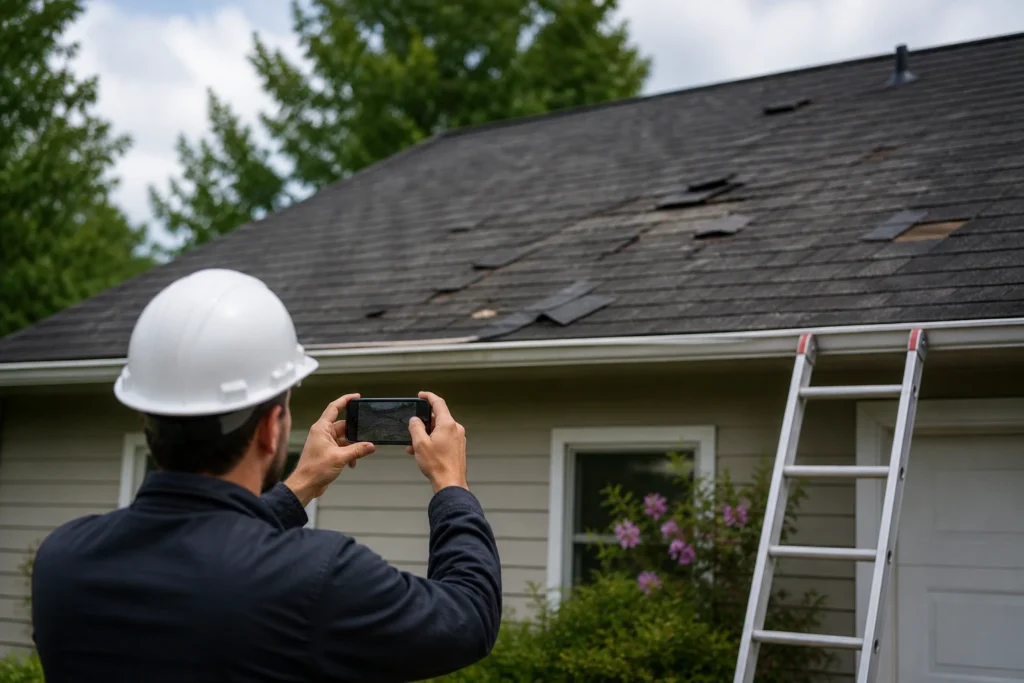
If you want to get paid what your claim is actually worth, understanding How to Document Hail Damage for an Insurance Claim is not optional it is the entire game. That might sound strong. It should. Because most homeowners do not lose money on claims due to bad policies. They lose because their documentation is incomplete, rushed, or scattered. I have seen it happen over and over again. Two homes take the same storm. One receives a full roof replacement. The other gets a partial payout—or a denial. The difference comes down to evidence.
In areas like Carrollton, where hailstorms can hit hard and fast, this gap shows up constantly. Many homeowners assume visible damage will be enough. It is not. Insurance companies do not pay based on what looks obvious. They pay based on what is clearly documented and proven. This guide walks you through How to Document Hail Damage for an Insurance Claim the right way. Step by step. No fluff. Just practical, detailed actions that help you protect your claim from the start.
Why Proper Documentation Determines Your Claim Outcome
Insurance claims are not built on assumptions. They are built on evidence. When you file a claim, you are not simply reporting damage. You are presenting a case. Every photo, every note, every piece of supporting information works together to tell a story. If that story is incomplete, your claim becomes easier to challenge.
Strong documentation does three critical things:
- It proves the damage exists
- It shows the damage is storm-related
- It supports the full cost of repair or replacement
Weak documentation creates gaps. And gaps create doubt.
When doubt enters the process, insurance carriers have room to reduce scope, question cause, or reclassify damage as wear and tear. That single shift can mean thousands of dollars lost. Understanding How to Document Hail Damage for an Insurance Claim puts you in control. Instead of reacting to the insurance company, you present clear, structured evidence that defines the conversation from the beginning.
When to Start Documenting Hail Damage
Start immediately. Do not wait until the next day. Do not wait for a contractor. Do not wait until you decide whether to file a claim. The moment the storm passes and it is safe, begin documenting.
Time is not on your side. Water dries. debris gets cleared. temporary repairs cover original damage. The longer you wait, the harder it becomes to prove what actually happened. Your first round of documentation does not need to be perfect. It needs to exist. Early photos establish a timeline. They show condition before anything changes.
For homeowners in Carrollton, timing matters even more. Hailstorms can be isolated, meaning one neighborhood is hit hard while another sees nothing. Your documentation must align with weather data to confirm your loss. Delaying documentation weakens your claim before it even begins.
Safety First Before You Document
Before you start taking photos, stop and think about safety. Storm damage creates hazards that are not always visible. Roofs can be slippery. Shingles can be loose. Structural integrity can be compromised.
Follow these guidelines:
- Do not walk on a wet or unstable roof
- Avoid steep slopes without proper equipment
- Stay clear of areas with visible structural damage
- Use a ladder only if you are stable and experienced
If conditions feel unsafe, stay on the ground.
Use alternatives instead:
- Zoom in with your phone camera
- Use binoculars to inspect roof surfaces
- Take photos from ladder height without stepping fully onto the roof
You can still document effectively without putting yourself at risk.
The Complete Hail Damage Documentation Checklist

This is the core of How to Document Hail Damage for an Insurance Claim. You are not taking random pictures. You are capturing evidence that supports your claim from every angle.
Exterior Roof Damage
Start with the roof.
Capture:
- Wide shots of each roof slope
- Mid-range photos showing clusters of impacts
- Close-ups of individual hail marks
- Soft metal damage on vents and flashing
Look closely for:
- Granule loss on shingles
- Circular impact patterns
- Cracks or bruising
Patterns matter. Hail damage typically follows wind direction. Showing that pattern strengthens your case significantly.
Gutters, Downspouts, and Flashing
Metal components are some of the strongest indicators of hail impact.
Document:
- Dents in gutters
- Marks along downspouts
- Scratches or chipped coating on flashing
These areas often provide clear, indisputable evidence of hail size and force.
Windows, Screens, and Siding
Damage extends beyond the roof.
Capture:
- Torn window screens
- Cracks or chips in glass
- Dents or fractures in siding
Even minor impacts help establish storm severity and consistency across your property.
Outdoor Property and Collateral Damage
This layer reinforces your claim.
Document:
- AC unit fin damage
- Patio furniture impacts
- Fence dents or chipped paint
- Vehicle damage
Collateral damage connects everything. It shows the storm affected multiple surfaces, not just your roof.
Interior Damage
This is often missed and it should not be.
Look for:
- Ceiling stains
- Active leaks
- Attic moisture
- Signs of mold or damp insulation
Interior damage proves functional impact. It links exterior damage to real consequences inside your home.
How to Take Photos That Strengthen Your Claim
Not all photos are helpful. Some create confusion or fail to show what matters. Strong documentation follows structure.
The 3-Level Photo Method
| Photo Type | Purpose | Example |
| Wide Shot | Show full area | Entire roof slope |
| Mid-Range | Show damage grouping | Section with multiple impacts |
| Close-Up | Show detail | Individual hail strike |
Best Practices
- Use natural light when possible
- Keep images sharp and clear
- Take multiple angles of each damaged area
- Include a reference object for scale
- Avoid shadows or glare
Do not edit or filter your images. Authentic documentation carries more weight.
Video Documentation: The Overlooked Advantage
Photos capture moments. Video tells the story. Walk your property and record continuously. Narrate what you see. Point out damage clearly.
Video provides:
- Context across different areas
- Continuity of damage patterns
- Real-time explanation
A simple walkthrough video can support your entire claim. It is one of the most overlooked parts of How to Document Hail Damage for an Insurance Claim, yet it adds significant credibility.
Organizing Your Documentation Like a Professional
Taking photos is only part of the process. Organization makes them usable. If your files are scattered, your claim becomes harder to review and easier to challenge.
Create a Folder Structure
- Roof Damage
- Exterior Components
- Interior Damage
- Collateral Evidence
- Reports and Documents
Use Clear File Names
Examples:
- Roof_NorthSlope_Close1.jpg
- Ceiling_Leak_LivingRoom.jpg
- Gutter_Dent_WestSide.jpg
Always include dates.
Maintain a Damage Log
Track:
- Date of storm
- Time of documentation
- Areas affected
- Observations
This log provides context that photos alone cannot capture.
Supporting Evidence That Strengthens Your Claim
Photos are your foundation. Supporting documents add strength.
Include:
- Weather reports confirming hail activity
- Contractor inspection summaries
- Maintenance records
- Insurance policy details
- Repair estimates
Professionals often rely on Xactimate to create standardized estimates. Using similar formats strengthens your claim’s credibility.
Interestingly, organizing complex claim data can resemble principles seen in advanced systems like Hilbert space where structure and dimensional clarity determine how effectively information can be interpreted. The clearer your structure, the stronger your case.
Common Documentation Mistakes That Hurt Claims
Avoid these common mistakes:
- Taking too few photos
- Ignoring interior damage
- Missing metal components
- Using poor-quality images
- Waiting too long to document
Another major mistake is assuming the adjuster will find everything. They will not. And they are not required to. Your responsibility is to present complete and accurate documentation.
How Insurance Companies Evaluate Your Documentation
Understanding this helps you document better.
Adjusters look for:
- Consistency across all damage areas
- Evidence linking damage to the storm
- Clear distinction between hail damage and aging
- Strong visual proof
They compare your documentation to their inspection findings. If your evidence is stronger, you gain leverage. If not, their version stands.
What to Do If Your Documentation Isn’t Enough
If your documentation falls short, act quickly.
- Re-inspect your property
- Capture additional photos
- Bring in a contractor
- Gather missing evidence
Claims can be supplemented. Many homeowners strengthen their claims after the initial submission. The key is speed and organization.
Advanced Documentation Strategies Most Homeowners Miss
This is where you separate a basic claim from a strong one.
Use Measurement-Based Evidence
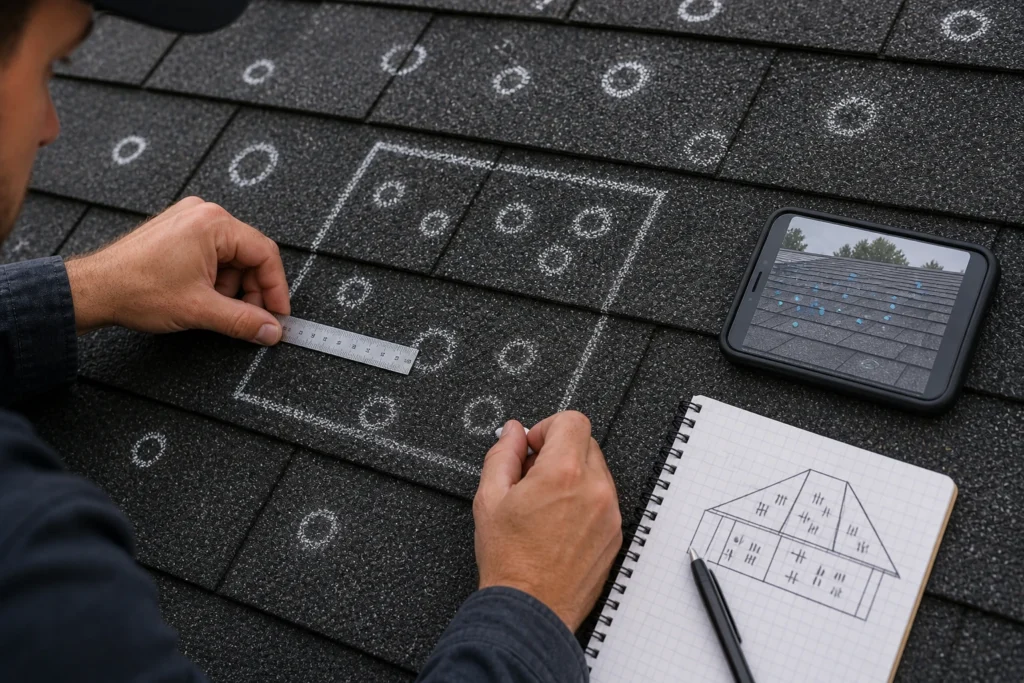
Count hail impacts within a defined area. Measure their size. Track how many slopes are affected. Numbers add clarity.
Map the Damage
Sketch your roof and mark damaged sections. This visual helps align your documentation with inspection reports.
Use Before-and-After Comparisons
If you have older photos, use them. They show that damage is new, not pre-existing.
Document Temporary Repairs
If you install tarps or make emergency fixes, record everything.
Include:
- Photos before repairs
- Photos after repairs
- Receipts
This shows you took steps to prevent further damage.
When to Consider Hiring a Public Adjuster

Sometimes documentation alone is not enough.
Consider professional help if:
- Your claim is underpaid
- Damage is extensive
- The insurer disputes your findings
- Negotiations stall
Public adjusters refine documentation, identify missing elements, and negotiate on your behalf. Homeowners in Carrollton often reach this point after larger storms when claims become more complex.
Final Thoughts: Documentation Is Your Leverage
Everything comes back to one idea. How to Document Hail Damage for an Insurance Claim is not about taking pictures. It is about building a case that holds up under scrutiny.
Strong documentation:
- Proves your loss
- Supports your repair scope
- Strengthens your position
Weak documentation does the opposite.
So take your time. Be thorough. Stay organized. Because when your claim is backed by clear, structured evidence, you are no longer hoping for a fair outcome. You are positioned to demand it.
And if you are also researching broader protection strategies, understanding Select Hail Damage Roof Insurance Claim: How to Protect Your Roof Hail Damage Roof Insurance Claim: How to Protect Your Roof can help you take a more proactive approach before the next storm ever hits.
FAQs
Immediately after it is safe, because early documentation preserves the most accurate evidence.
You can, but your claim will be much weaker and harder to prove without visual evidence.
A mix of wide, mid-range, and close-up photos that clearly show damage patterns and detail.
Yes, interior damage helps prove the impact and connects roof damage to real loss.
Yes, modern smartphones are sufficient as long as the images are clear and well-structured.
Document as soon as possible and support your claim with weather reports and inspections.
It can help strengthen your documentation and identify damage you might miss.
Take enough to cover all affected areas thoroughly there is no strict limit, but completeness matters.
Flashing, soft metals, and interior signs of leaks are often overlooked.
If your claim is underpaid, denied, or becomes difficult to negotiate, it may be time to bring in help.