
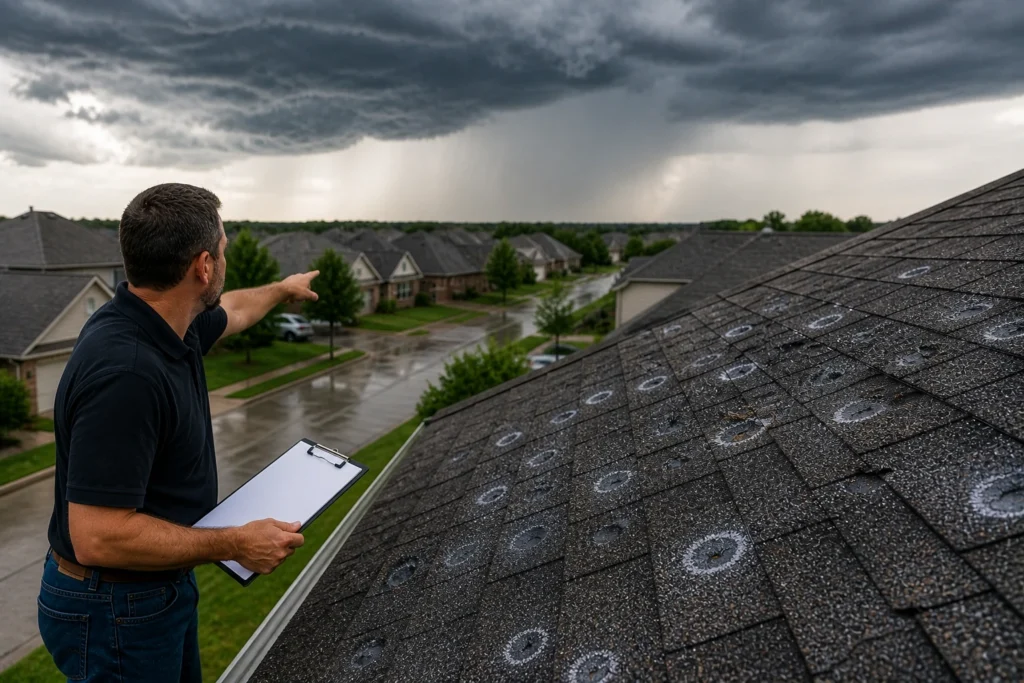
You open the letter. You skim the first few lines. And there it is your claim has been denied. If you’re searching for What to Do If Your Hail Claim Was Denied in Carrollton, TX, you’re already ahead of most homeowners. You’re asking questions. You’re not accepting the first answer. That alone puts you in a stronger position.
Because here’s the reality: a denial feels final, but it rarely is. Insurance companies make decisions based on the information in front of them at a specific moment in time. If that information is incomplete, rushed, or poorly documented, the outcome will reflect that. Not necessarily the true condition of your roof.
I’ve seen claims go from denied to fully approved not because the damage changed, but because the strategy did. This guide gives you that strategy. Clear steps. Real leverage. No wasted motion.
Why Hail Claims Get Denied
Before you push back, you need to understand what you’re pushing against. Insurance companies follow patterns. Their denial reasons are rarely unique. Once you understand those patterns, you can challenge them directly.
Common Reasons Insurance Companies Deny Hail Claims
Here’s what shows up most often:
- “Wear and tear” classification
If damage can be attributed to age, your claim gets denied. - No functional damage
Impacts may exist, but they’re labeled cosmetic instead of performance-related. - Insufficient documentation
Weak photos or missing supporting evidence can shut a claim down quickly. - Late filing
Delays create doubt and insurers use that doubt. - Pre-existing damage arguments
The insurer claims the damage existed before the storm.
Each of these is not a conclusion it’s a position. And positions can be challenged.
Step 1 – Carefully Review Your Denial Letter
This is where your response begins. Not with emotion. Not with assumptions. With precision. Read your denial letter slowly. Line by line.
What to Look For in the Denial Explanation
Focus on:
- Specific phrases like “cosmetic damage only”
- Policy exclusions being referenced
- Vague or generalized reasoning
These are not random. They define the insurer’s stance.
Extracting Leverage From the Denial Letter
Ask yourself:
- What evidence would directly contradict this statement?
- What assumptions are being made?
- Where is the explanation weak?
If the denial says there’s no functional damage, your job is to prove functional impact not just visible dents. That shift changes everything.
Step 2 – Re-Inspect Your Roof With a Strategy
Most inspections fail because they lack structure.
You need to approach this differently.
What Most Homeowners Miss
Look for:
- Soft metal damage (vents, flashing, gutters)
- Granule displacement patterns
- Subsurface bruising
- Consistent impact patterns across slopes
- Collateral damage around the property
Damage is not just about what you see it’s about how it connects.
When to Bring in a Professional
If you’re unsure, bring in:
- A contractor experienced in storm damage
- A public adjuster
One identifies damage. The other builds a claim around it.
Step 3 – Build Strong Documentation That Challenges the Denial
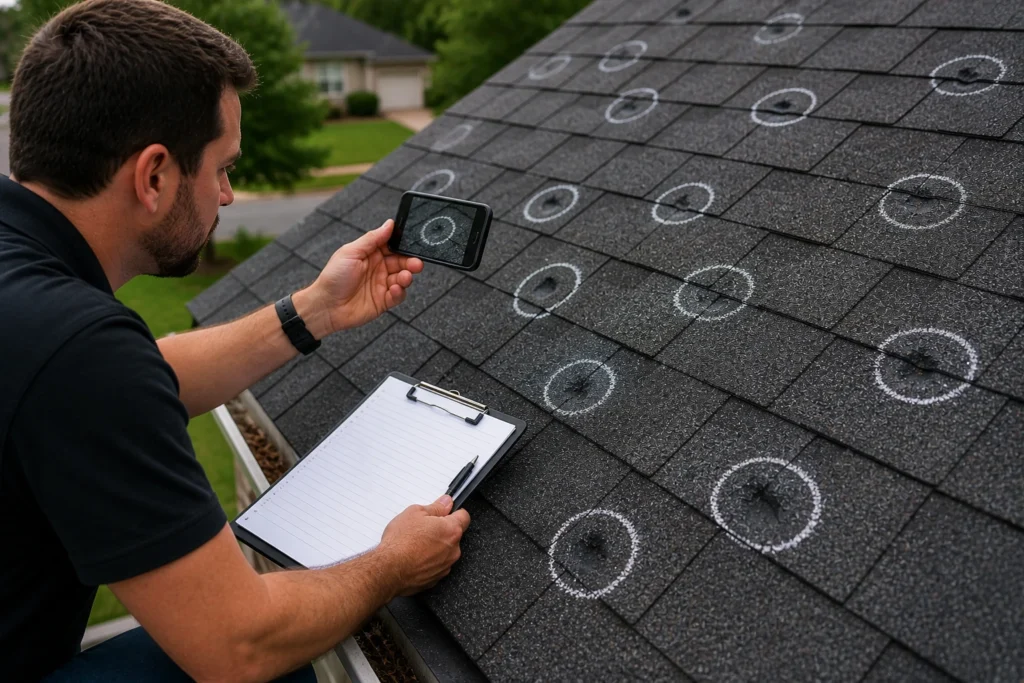
This is the turning point. Strong documentation transforms your claim from questionable to defensible. If you want a deeper framework, understanding How to Document Hail Damage for an Insurance Claim becomes critical at this stage.
The 3-Level Photo Method
| Photo Type | Purpose | Example |
| Wide Shot | Show full roof slope | Entire section |
| Mid-Range | Show damage clusters | Grouped impacts |
| Close-Up | Show detail | Individual strikes |
Advanced Documentation Strategies
- Mark impacts with chalk
- Capture multiple angles
- Include surrounding damage
- Pair images with weather reports
When done right, your documentation becomes evidence not just visuals. In many ways, identifying damage patterns mirrors complex analytical thinking found in Topology, where relationships and structure define the bigger picture.
Step 4 – Understand What Insurance Carriers Commonly Miss
Most claims are underpaid for one simple reason: incomplete scope.
Commonly Missed Items
- Underlayment
- Flashing
- Ridge caps
- Starter shingles
- Ventilation systems
- Code upgrades
Each missing line item reduces your claim value.
Why It Happens
- Limited inspection time
- Simplified evaluation
- Cost control
But here’s the opportunity these gaps can be corrected.
Step 5 – File a Claim Supplement
A supplement is how you correct the record.
What It Does
- Adds missed damage
- Expands scope
- Supports your position with evidence
What a Strong Supplement Includes
- Detailed estimate
- Supporting photos
- Clear written explanation
This is where many denied claims regain traction.
Step 6 – Xactimate and Estimate Accuracy
This is where claims are won or lost.
What a Strong Estimate Includes
| Component | Why It Matters |
| Labor costs | Drives total value |
| Materials | Must reflect current pricing |
| Waste factor | Accounts for loss |
| Code upgrades | Required compliance |
| Detach/reset items | Real labor complexity |
Without these, your estimate is incomplete and easier to deny.
Step 7 – Use the Appraisal Clause
If your policy allows it, appraisal can resolve disputes quickly.
- Each side hires an appraiser
- A neutral umpire settles differences
Best used when the dispute is about cost not coverage.
Step 8 – File a Complaint If Needed
If your claim stalls, escalation creates pressure.
A complaint forces the insurer to respond and often speeds up the process.
Step 9 – Consider Hiring a Public Adjuster
At some point, expertise matters. In Carrollton, many homeowners reach this stage when claims become technical or disputed.
What They Do
- Represent your interests
- Build stronger claims
- Negotiate directly
This changes the dynamic completely.
Step 10 – Legal Options
If needed, legal action becomes the final step.
- Settlement
- Lawsuit
- Recovery of damages
Not always necessary but always an option.
Denied vs Approved Claims
| Factor | Denied | Approved |
| Documentation | Weak | Strong |
| Scope | Limited | Complete |
| Strategy | Reactive | Proactive |
The difference is execution.
Local Factors That Impact Claims

Every region behaves differently.
n Carrollton, storm patterns and building standards influence claim outcomes more than most realize.
Storm Variables
- Hail size variation
- Wind-driven impacts
- Uneven distribution
Building Considerations
- Code requirements
- Material standards
- Installation practices
If your claim ignores these, it’s incomplete.
Mistakes to Avoid
Avoid these at all costs:
- Accepting denial too quickly
- Weak documentation
- Missing deadlines
- Hiring the wrong help
- Ignoring policy language
Each one limits your recovery.
Quick Action Checklist
- Review denial letter
- Re-inspect roof
- Document damage
- Identify missing scope
- Submit supplement
- Escalate if needed
Real-World Scenario
A homeowner receives a denial citing “no functional damage.”
They:
- Re-inspect the roof
- Document soft metal damage
- Build a structured photo set
- Submit a revised estimate
- File a supplement
Result?
Claim reopened. Scope expanded. Payment issued. Same damage. Better strategy.
Final Thoughts: Turning a Denial Into an Opportunity

If you’re dealing with What to Do If Your Hail Claim Was Denied in Carrollton, TX, remember this: A denial is not the end. It’s leverage.
With the right approach, you can:
- Strengthen your documentation
- Challenge weak conclusions
- Rebuild your claim with precision
And when done correctly, outcomes change. Stay focused. Stay structured. And don’t walk away too early. Because in many cases, the real claim process begins after the denial not before.
FAQs
Yes, you can reopen your claim if you provide new evidence or submit a supplement that challenges the original decision.
Timelines vary by policy, but it’s best to act immediately to avoid missing deadlines or weakening your position.
The most common reason is the insurer classifying damage as wear and tear instead of storm-related.
It’s highly recommended, as professionals can identify damage and documentation gaps that homeowners often miss.
A claim supplement is a formal request to revise your claim based on additional evidence or missed damage.
Filing a complaint can prompt the insurer to review your claim more carefully and respond more quickly.
It can be worth it for larger or complex claims, especially if your initial claim was denied or underpaid.
The appraisal clause allows both sides to resolve disputes over the value of the claim through neutral third parties.
Yes, but it requires strong documentation, understanding of your policy, and a structured approach.
Start by reviewing the denial letter carefully to understand the insurer’s reasoning and identify what needs to be challenged.