
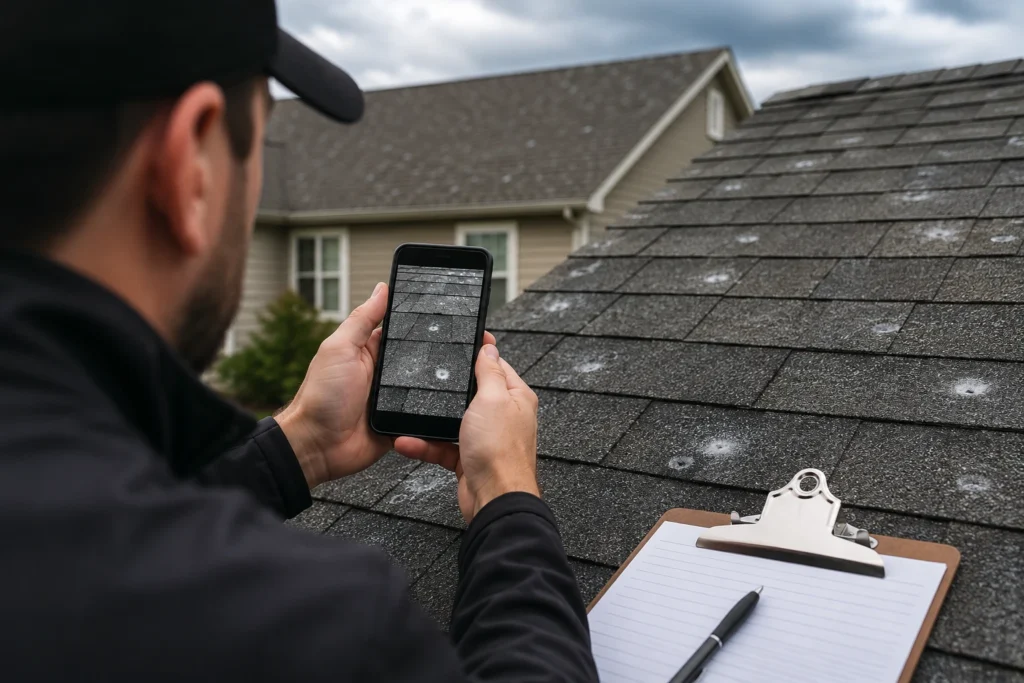
Hailstorms don’t just pass through they leave a financial footprint behind. If you’re dealing with a roof hail damage insurance claim Texas, you’re not just filing paperwork. You’re stepping into a process that can either fully restore your property… or quietly leave you covering thousands out of pocket. That’s the reality most homeowners don’t see coming.
Insurance companies move fast. Inspections happen quickly. Estimates get written. Payments follow. But here’s the problem speed often comes at the cost of accuracy. Small misses in a hail damage on roof insurance claim can lead to major financial gaps. I’ve seen roofs that looked “fine” from the ground turn into full replacements after proper inspection. The difference wasn’t luck. It was detail. This guide is built to give you that edge.
Understanding Hail Damage and Why It’s Often Missed
Hail damage is deceptive. It doesn’t always scream for attention. From the ground, everything might look intact. No missing shingles. No obvious holes. But underneath? That’s where problems begin. Impact damage weakens materials. It breaks protective layers. It creates vulnerabilities that don’t show up immediately. And during a roof hail damage insurance claim Texas, that delay works against you.
Insurance adjusters operate under pressure. Multiple claims. Limited time. Standardized processes. That environment doesn’t favor deep inspections. And here’s where it gets interesting. Claims behave like complex systems. Small inputs create big outcomes similar to principles studied in Nonlinear Dynamics. One missed line item can shift thousands of dollars in your final payout. That’s why precision matters.
How to Identify Hail Damage by Roof Type (Expert Breakdown)
Different roofing materials react differently to hail. Understanding those differences is critical if you want to protect your hail roof damage insurance claim.
Asphalt Shingle Roofs
The most common and the most misunderstood.
Look for:
- Granule loss (dark exposed spots)
- Soft bruising when pressed
- Random circular impact marks
- Ridge cap damage
Granules act as protection. Once they’re gone, UV exposure accelerates deterioration. That means your roof ages faster sometimes dramatically.
Metal Roofs
Strong, but not invincible.
Watch for:
- Dents that affect seams
- Fastener displacement
- Coating damage leading to rust
Not every dent qualifies for a hail damage on roof insurance claim, but functional damage absolutely does.
Tile Roofs (Clay or Concrete)
Durable on the surface. Fragile under impact.
Check for:
- Cracks and fractures
- Chips and edge breaks
- Dislodged tiles
- Underlayment exposure
The real issue? Hidden damage. Impact transfers through the tile to the underlayment, which is what actually keeps water out.
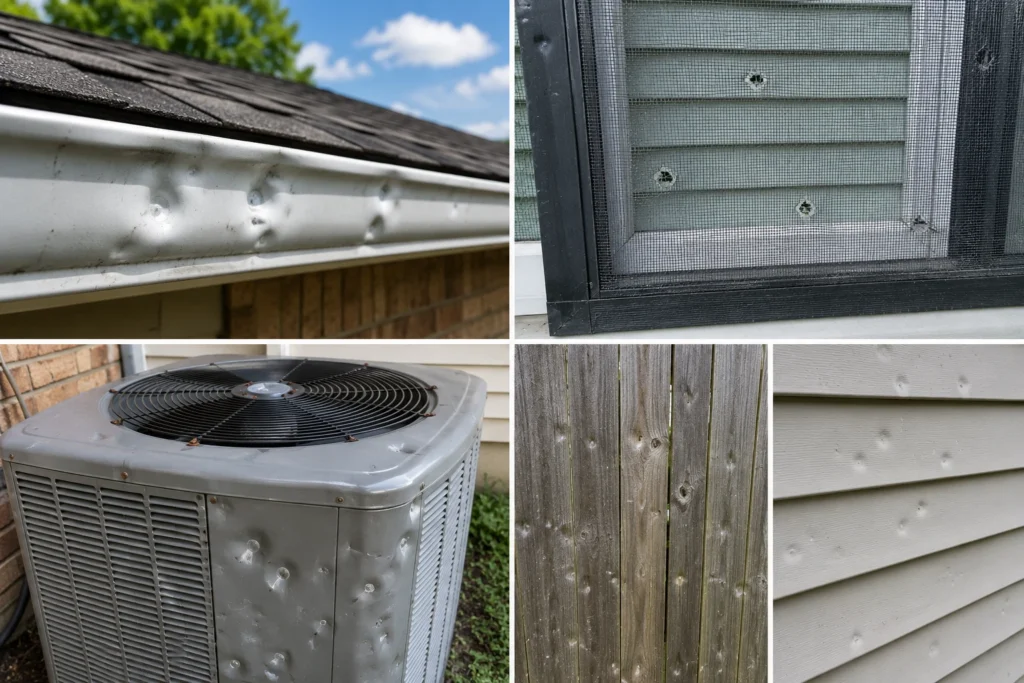
Collateral Indicators (Often Overlooked)
This is where strong claims are built.
Look for:
- Dented gutters
- Damaged window screens
- HVAC fin impacts
- Fence and siding marks
Collateral damage proves storm intensity. And that strengthens your roof hail damage insurance claim Texas.
Immediate Steps to Take After a Hailstorm
The storm ends. Your decisions begin.
1. Prioritize Safety
Stay off the roof initially. Wet surfaces and structural damage increase risk.
2. Capture Immediate Evidence
Take photos of:
- Roof areas from the ground
- Gutters and downspouts
- Exterior damage points
Document early. Evidence fades fast.
3. Prevent Further Damage
If there’s visible damage:
- Tarp exposed areas
- Remove debris
- Stop active leaks
Insurance policies require mitigation. Skip this, and your payout could be reduced.
4. Schedule a Professional Inspection
This is critical.
A trained inspector sees what others miss. Especially subtle hail damage.
5. Act Within Policy Timelines
Delays weaken your hail roof damage insurance claim. File early. Document everything.
How to Document Hail Damage for an Insurance Claim
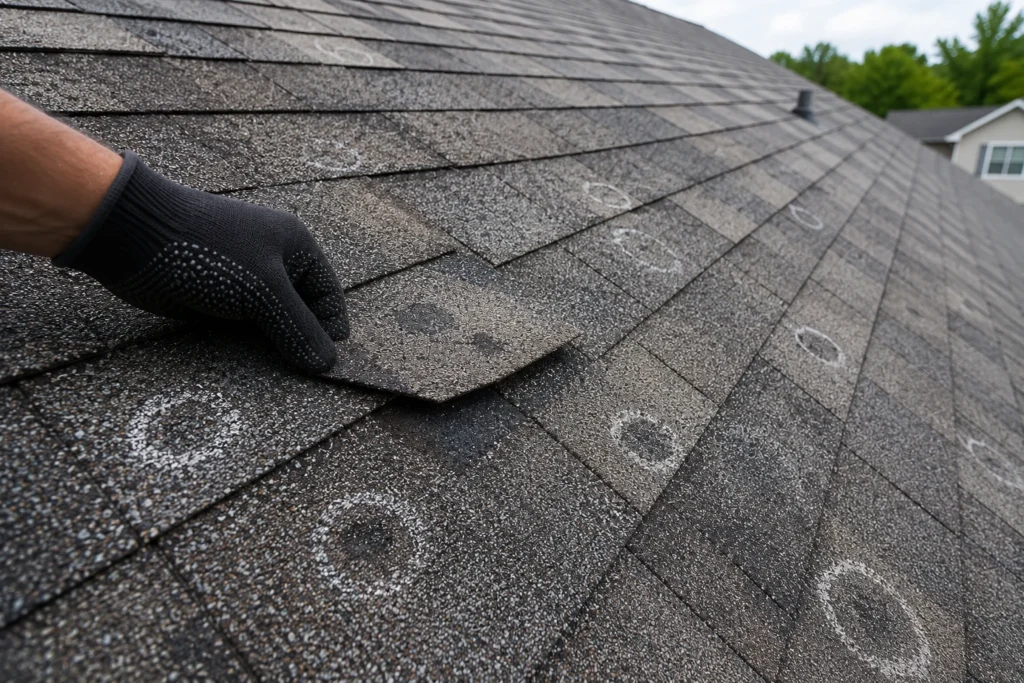
This is where many claims are won or lost. If you’re serious about maximizing your payout, understanding How to Document Hail Damage for an Insurance Claim is essential.
Documentation isn’t optional. It’s leverage.
Photo Documentation Strategy
Use three levels:
- Wide shots (entire roof)
- Mid-range (sections of damage)
- Close-ups (impact points)
Mark damage with chalk to highlight it clearly.
Interior Documentation
Check:
- Ceiling stains
- Wall discoloration
- Attic moisture
- Insulation issues
Interior damage connects cause and effect.
Supporting Evidence
Strengthen your file with:
- Weather reports
- Contractor inspections
- Maintenance records
Organizing Your Claim
| Category | Contents |
| Photos | Before and after images |
| Reports | Inspection notes |
| Communication | Emails and calls |
| Receipts | Repairs and mitigation |
Organization speeds up your claim and improves outcomes.
What Insurance Carriers Commonly Miss in Their Scope
This is where most claims fall short. In fact, Hail Damage Claim Supplements: What Carriers Miss in Their Scope is where homeowners often recover thousands in missed repairs.
Common omissions include:
- Underlayment damage
- Flashing failures
- Ventilation systems
- Ridge caps
- Code upgrades
- Waste factors
- Steep roof charges
Each missed item reduces your payout.
The Supplement Process Explained (How to Recover What Was Missed)
You’re not stuck with the first estimate.
What Is a Supplement?
A correction to include missed or additional damage.
When to File One
- After contractor inspection
- When hidden damage appears
- When code requirements are missing
How It Works
- Updated scope created
- Documentation submitted
- Insurance reviews
- Payment adjusted
Common Supplement Items
- Decking replacement
- Ice and water shield
- Flashing upgrades
- Additional labor costs
Why a Public Adjuster Changes the Outcome
If you’re comparing Public Adjuster vs. Insurance Adjuster for Hail Claims in Carrollton, TX, the difference is simple: representation.
Insurance adjusters work for the carrier. Public adjusters work for you.
What They Do
- Analyze your policy
- Build a full damage scope
- Use Xactimate for estimates
- Negotiate directly
Real Results
- Higher settlements
- More complete repairs
- Faster resolution
- Less stress
In a roof hail damage insurance claim Texas, expertise changes outcomes.
Common Reasons Hail Claims Are Denied or Underpaid
Here’s why claims fail:
- “Wear and tear” classifications
- Weak documentation
- Late filing
- Limited visible damage
- Incomplete inspections
If you hit a roadblock, knowing What to Do If Your Hail Claim Was Denied in Texas can shift the outcome in your favor.
Advanced Strategy: How to Strengthen Your Claim
Want better results? Be proactive.
- Request re-inspections
- Use appraisal clauses
- File complaints if needed
- Bring in experts
- Control timelines
Small actions create big leverage.
Local Insight: Hail Damage Risks in Carrollton
Storm patterns in Carrollton bring consistent hail exposure. It’s not rare. It’s expected. Many homes in Carrollton use roofing systems that show delayed damage. That means issues surface weeks later often after initial inspections. That delay can cost you. Homeowners in Carrollton need early inspections, strong documentation, and a proactive approach to protect their claims.
Preventative Measures to Protect Your Roof
You can’t stop hail. But you can reduce the impact.
- Install impact-resistant shingles
- Schedule regular inspections
- Maintain your roof consistently
- Review your policy annually
Preparation reduces surprises.
Final Thoughts: Take Control of Your Hail Damage Claim
A roof hail damage insurance claim Texas isn’t just paperwork. It’s a system. And systems reward preparation. Missed details cost money. Weak documentation limits payouts. Delays reduce leverage. But when you approach your claim strategically documenting thoroughly, inspecting carefully, and pushing for accuracy you take control.
You stop reacting. You start directing the outcome. And that’s where real results happen.
FAQs
Most policies allow 1–2 years, but earlier is better to preserve evidence and avoid disputes.
Hail as small as 1 inch can damage asphalt shingles, while larger hail increases the likelihood of structural issues.
It depends on your policy; some exclude cosmetic damage unless it affects the roof’s function.
Yes. Hail damage often weakens roofing materials before leaks appear.
Not always initial estimates frequently miss items that can be recovered through supplements.
It’s a request to add missed or additional damage costs to your original claim estimate.
It’s highly recommended, as professionals identify damage that may be overlooked.
Yes, granule loss and bruising can accelerate deterioration over time.
Hail is typically considered an “Act of God,” so individual claims may not directly raise your premium, but rates can increase regionally.
Consider hiring one if your claim is denied, underpaid, or complex.